
Our project involves the analysis and modeling of customer behavior for pharmacists, aiming to group them into homogeneous segments(all data is encrypted)
The objectives is to define tailored business, marketing strategies and anticipating their future behaviors
Page 1: Pharmacy
General overview of the selected pharmacy (Location, Purchase History, RFM Score, and RFM Segment for the last year's two semesters).
Page 2: Segmentation
The segmentation part based on RFM Score with filters for Pharmacy, Segment, and Delegate. It includes the transition of segments and the dominant segment in each region for each period.
The most critical section on this page is the alert table, where we identify pharmacies whose VIP customers transition from premium to inactive. This alerts us to investigate and initiate an inquiry. We implement drill-through technique here, enabling us to view more detailed information for each of these pharmacies.
Page 3: Clustering
Here, we establish an unsupervised machine learning model that uncovers similar customer behaviors based on their purchase histories and profiling. We segment each customer according to their cluster.
Page 4: Mapping
We get a general idea of each region, its corresponding dominant segment, and the average RFM scores.
Page 5: Decision Making
This section summarizes the behavior of each pharmacy based on its RFM Segment, Cluster, Purchase Amount, Purchase History, and segment transition over the past year.
Tools and data pipeline
{JSON}



- Data is extracted from the pharmaceutical industry server
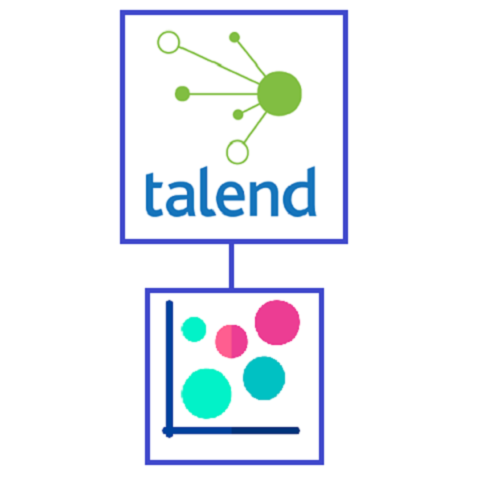
- Within Talend job, I created a machine learning clustering model to group similar clients and then deployed and synchronized this job on Azure virtual machine.